
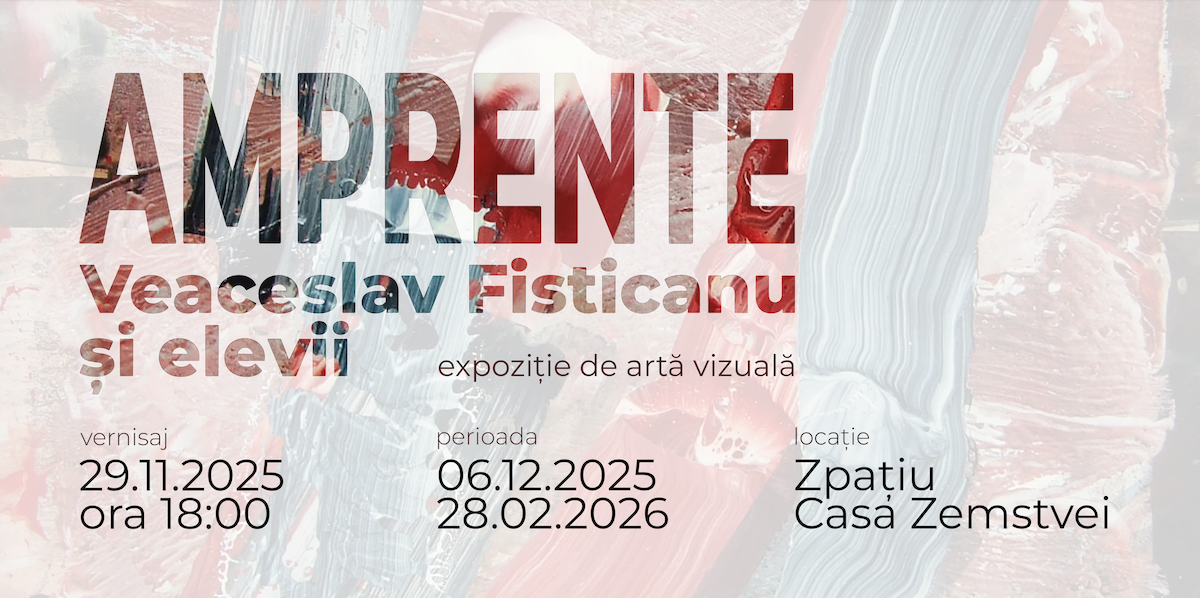
Imprints. Veaceslav Fisticanu and his students – visual art exhibition
Saturday, November 29, 2025, 6:00 pm – opening
December 6, 2025 – February 28, 2026, 4:00-8:00 pm (visiting program on Saturdays)
Zpace (Casa Zemstvei, 103 Al. Sciusev Street, Chisinau)
Dear friends, we invite you on November 29, 2025, at 6:00 pm, to the opening of the exhibition “Imprints. Veaceslav Fisticanu and his students“. The exhibition brings together works created between 1991 and 2025 by Veaceslav Fisticanu and his students, whom he taught at the Academy of Music, Theater and Fine Arts (AMTAP), within the Faculty of Visual Arts and Design at UPS “Ion Creangă”, at the College of Fine Arts “Alexandru Plămădeală” and at the Academic High School of Fine Arts “Igor Vieru”, and with whom he continues to collaborate today.
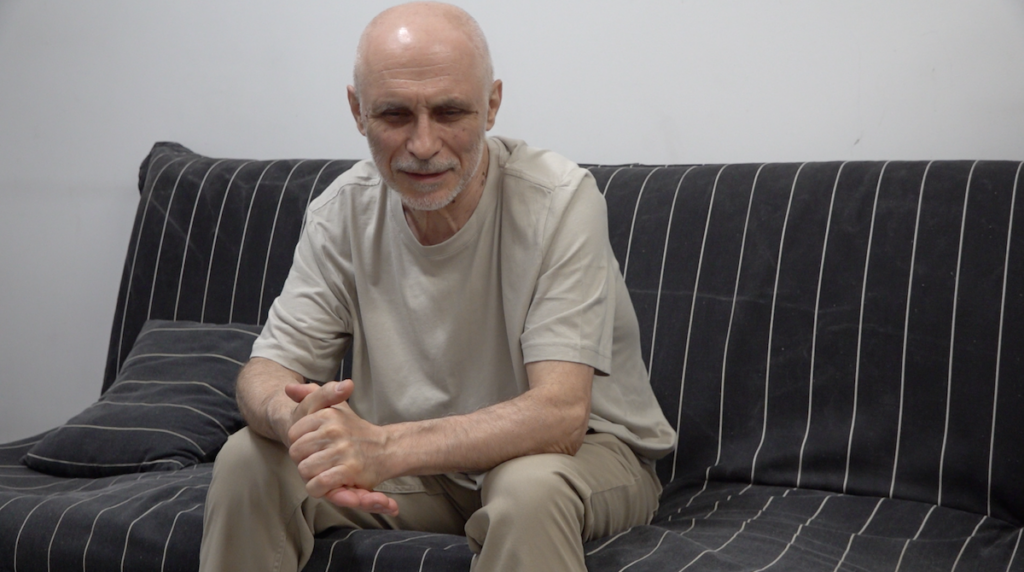
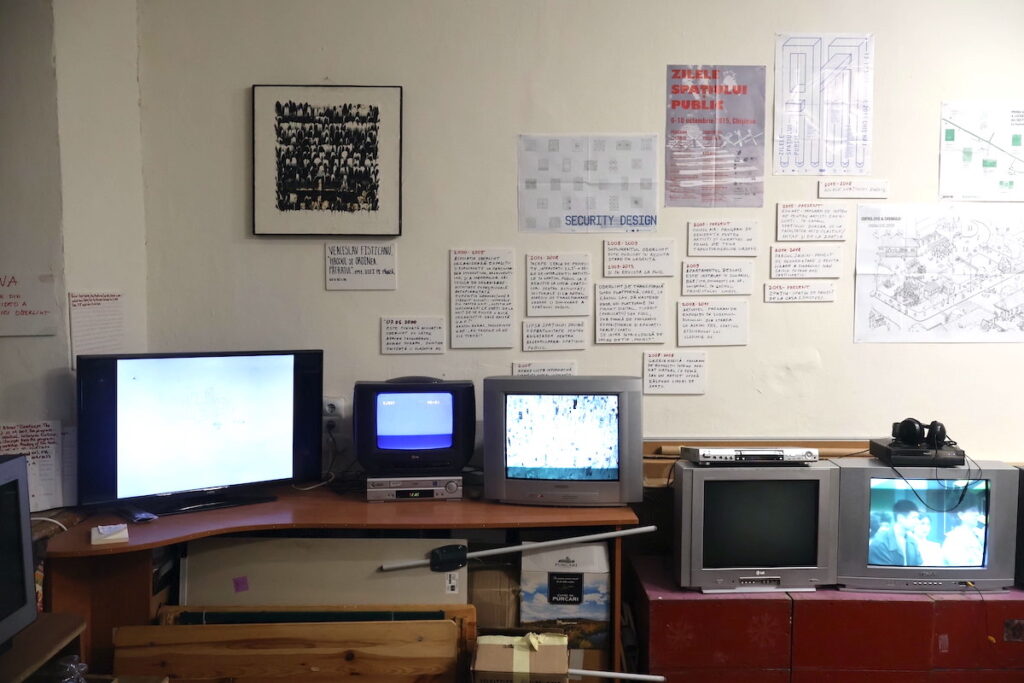
Some of the works on display belong to members of the Oberliht Association, who self-organized themselves with the aim of supporting emerging artists in the absence of exhibition programs for art students. Their works are complemented by a series of videos (the Oberliht Association’s video archive) documenting the early years of its activity and serving as an educational and promotional framework for visual art for those interested in the exhibition context of the 2000-2005 period. Presented initially as part of the “Ways of Organisation” project, the video archive has been complemented with an interview with Veaceslav Fisticanu, which will be presented in the exhibition.
The Oberliht Association has also been active for many years in Casa Zemstvei, under the umbrella of the Zpace project, which is based on the idea of a community cultural center accessible to independent cultural initiatives. Considering the significance of this space for the local art scene and in a spirit similar to that of its first public event, “Geamuri / Windows” (2000), the exhibition “Amprente / Imprints” (2025) aims to bring together the works of different generations of artists, former and current students, who came out of Veaceslav Fisticanu’s studio and are united by the same school, thus contributing to the strengthening of this community and encouraging new connections within it.
participants: Ciprian Antoci / Alexandra Babără / Lora Banari / Maria Bantuș / Angela Candu / Olga Cuculescu / Daria Cuznețova / Cornelia Druță / Veaceslav Fisticanu / Anatol Fornea / Olivia Furtună / Mireana Hmelnițkaia / Adrian Moraru / Dumitru Musteață / Vadim Palamarciuc / Valentin Pascari / Ghenadie Popescu / Ionuț Ion Savin / Vladimir Savițkii / Anastasia Sidorenco / Inga Spravedlivaia / Ruslan și Ala Streleț / Olga Șatova / Andrei Șimanschi / Anastasia Trifan / Vladimir Us
Veaceslav Fisticanu developed a taste for art while still in high school. He later continued his studies in Kiev, where he gained access to magazines about contemporary art, including Romanian literature. Although competition for admission to centers in the former USSR was fierce, with 10-15 candidates for a single place, his preparation was good for joining the Kiev Academy of Arts, where he studied painting from 1978 to 1984. Unlike his Ukrainian colleagues, who were influenced by the socialist-realist school, Fisticanu showed a greater openness to Western art, researching themes such as cubism and expressionism (considered bourgeois), secretly copying Ion Salisteanu’s works in his dormitory in order to understand how he expressed his thoughts in painting.
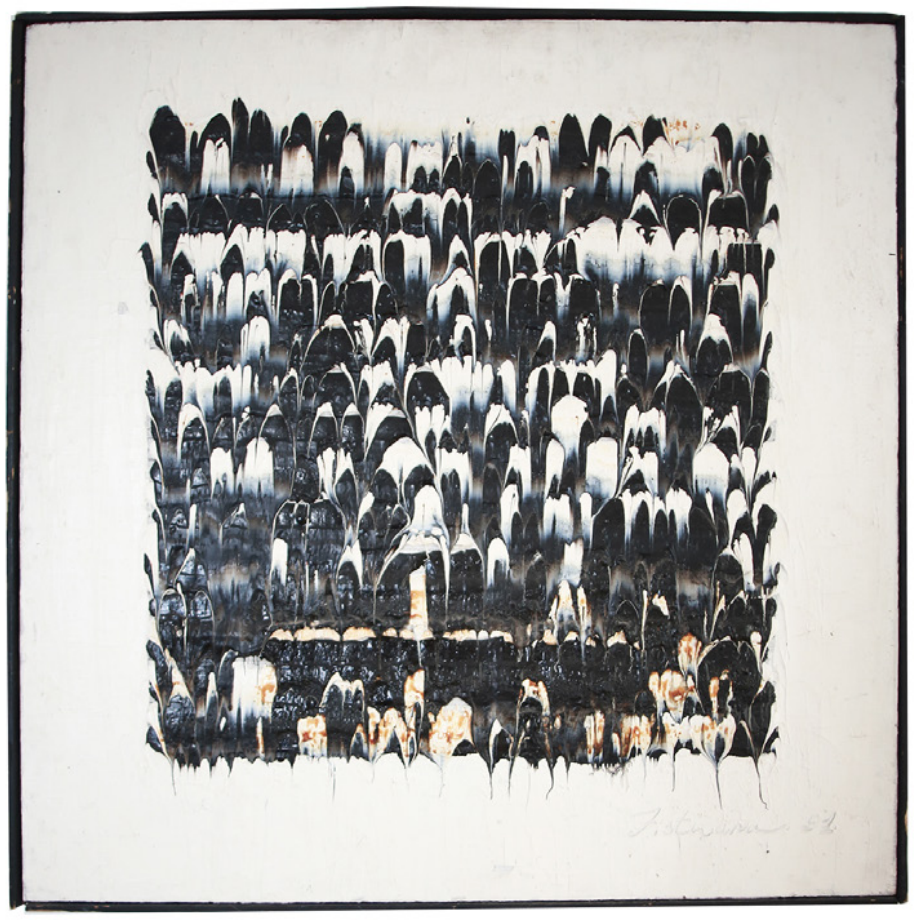
Returning to Moldova, Fisticanu moved away from the academic school he had attended in Kiev, drawing inspiration from prominent local and foreign artists (Mihai Grecu, Günther Uecker, etc.). In the 1990s, Fisticanu began to create new works in the style of abstract expressionism, which gradually developed as a series of conceptual works called “Chaos and Order.”
A crisis in his creative work prompted him to delve deeper into the field of education, where, at the Institute of Arts (today AMTAP), he developed his own methodology for teaching painting, drawing, and composition, experimenting with students and attempting to lay the foundations for a school that would avoid the shortcomings of the schools he himself had attended. Thus, beyond his artistic achievements, which were appreciated in international exhibitions, Veaceslav Fisticanu became known as a teacher of art, succeeding, between 1990 and 2025, to educate and influence several generations of artists, while developing with them a friendship relationship based on equality.
His ability to combine the two roles – that of an artist (painter) and mentor – speaks a lot about the complexity of his personality and tells us that one without the other would be impoverished. In other words, you cannot teach a discipline without practicing it daily to test its limits and relevance, and vice versa, sharing your ideas with other people (students or professional artists) helps you reflect on your own artistic practice and grow in what you set out to do.
curator: Vladimir Us
–
This event is organized by Oberliht Association, with the support of the Ministry of Culture of the Republic of Moldova / hosted by Zpace / media partners: fest.md, unde.io and platzforma.md / technical support: CSCI of RM.